Agricultural Biomass Fuel Supplier in India for Industrial Applications
Agricultural biomass fuel is sourced from suitable agricultural residues and processing by-products that can be supplied as raw feedstock, prepared biomass or further processed into densified fuels. For industrial buyers, the right material depends on fuel characteristics, physical form, equipment compatibility, availability, logistics and delivered cost.
Ashmit Bio Synergy supplies agricultural biomass feedstocks including rice husk, groundnut shell, cashew nut shell and processed stubble and paddy straw bales for industrial fuel and biomass-processing requirements.
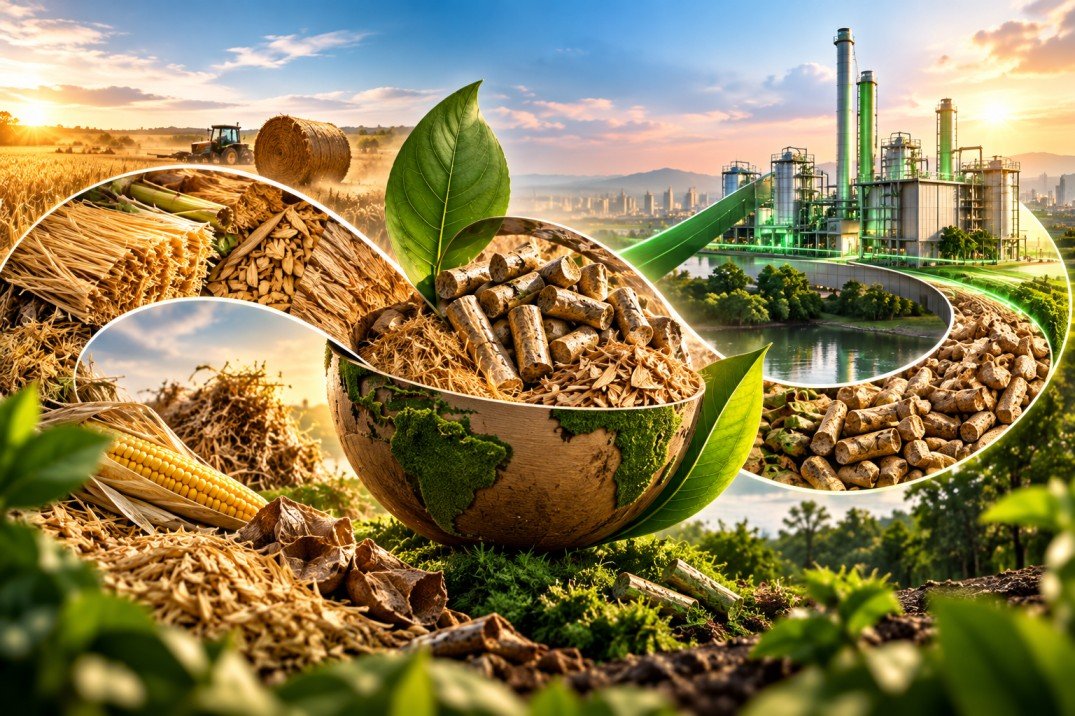
Agricultural Biomass Feedstocks for Industrial Fuel
Different agricultural residues have different GCV, moisture, ash, density, physical form, availability and handling requirements. The correct feedstock should therefore be selected according to the plant's equipment and intended application.
Rice Husk
Rice husk is an agricultural residue generated during rice milling and can be used as biomass feedstock for suitable industrial combustion systems or as a raw material for further biomass processing.
Buyers should evaluate GCV, moisture, ash, silica-rich ash characteristics, bulk handling, delivery format and combustion-system compatibility.
Groundnut Shell Biomass
Groundnut shells are agricultural processing residues with useful energy value and a relatively compact physical form. They can be evaluated for compatible industrial boilers, furnaces and other thermal systems.
Important buyer considerations include GCV, ash, moisture, physical form, combustion behaviour, availability and delivered cost.
Cashew Nut Shell Biomass
Cashew nut shells are agricultural processing residues that can provide high-energy biomass for suitable industrial thermal applications.
Fuel suitability should be evaluated using GCV, moisture, ash, volatile matter, combustion behaviour, handling requirements and supply consistency.
Stubble & Paddy Straw Bales
Agricultural stubble and paddy straw can be collected and compressed into bales for transportation, storage and large-volume biomass handling.
Bale quality depends on moisture, density, material consistency, storage conditions, transportation and the receiving plant's fuel-preparation system.
Ashmit Bio Synergy's current agricultural biomass portfolio includes Rice Husk, Groundnut Shell, Cashew Nut Shell and Stubble & Paddy Straw Bales.
Agricultural Biomass Fuel vs Pellets & Briquettes
Agricultural biomass feedstock, biomass pellets and biomass briquettes represent different fuel-supply routes.
The right option depends on the plant's receiving system, preparation capability, storage, feeding arrangement, required fuel consistency and operating economics.
Agricultural Biomass Feedstock
Raw or prepared agricultural biomass can be suitable where the plant has the infrastructure to receive, store, prepare and use the material directly or process it further.
Biomass Pellets
Pellets are a smaller and more uniform densified fuel form suitable for plants with compatible pellet storage and feeding systems.
Explore Biomass Pellets →Biomass Briquettes
Briquettes are a larger compressed biomass fuel form used in compatible boilers, furnaces, kilns and thermal systems.
Explore Biomass Briquettes →How Should an Industrial Buyer Choose?
Start with the equipment and required fuel format rather than choosing only by fuel name.
Agricultural Biomass Fuel Specifications for Industrial Buyers
Agricultural biomass should be evaluated using measurable fuel and handling characteristics before commercial procurement.
Gross Calorific Value (GCV)
GCV indicates the energy value of the biomass and helps estimate potential fuel consumption for the intended application. Different agricultural residues can have materially different GCV values, so buyers should request the applicable specification for the selected feedstock.
Moisture Content
Moisture affects useful energy, storage behaviour and combustion performance. Higher moisture can increase handling and drying requirements and reduce the useful energy available from a given quantity of biomass.
Ash Content
Ash is the non-combustible residue remaining after combustion. The acceptable ash level depends on the feedstock, combustion equipment, ash-handling system and operating conditions.
Sulphur Content
Sulphur should be considered where the plant has specific fuel-quality or emissions requirements. The applicable sulphur specification should be confirmed for the selected feedstock and end-use system.
Bulk Density & Physical Form
Loose residues, shells and bales have different bulk densities and therefore different storage, transportation and unloading requirements. Physical form is an important part of delivered fuel economics.
Material Consistency & Contamination
Industrial buyers should evaluate consistency between deliveries and control unwanted foreign material. Changes in moisture, composition, particle form or contamination can affect fuel preparation, combustion and equipment operation.
Request Agricultural Biomass Specifications
Request SpecificationsAgricultural Biomass Fuel for Industrial Applications
Agricultural biomass can serve different industrial applications depending on its fuel characteristics, preparation requirements and the receiving equipment.
Agricultural Biomass for Industrial Boilers
Suitable agricultural biomass can be considered for compatible industrial boilers used for steam generation and process heating. Buyers should evaluate moisture, ash, GCV, physical form, feeding arrangement and expected fuel consumption.
Agricultural Biomass for Biomass Power Plants
Large-scale biomass power applications require reliable feedstock availability, appropriate fuel preparation, storage capacity and bulk logistics.
Agricultural Biomass for Industrial Furnaces
Industrial furnaces can evaluate suitable agricultural biomass where the fuel can be handled, prepared and combusted effectively within the equipment.
Agricultural Biomass for Brick & Lime Kilns
Suitable agricultural residues can be considered for compatible brick and lime kiln systems requiring sustained thermal energy.
Agricultural Biomass for Process Heating
Manufacturing operations using process heat can evaluate agricultural biomass where the plant's thermal system can accommodate the selected fuel form and operating characteristics.
How to Choose the Right Agricultural Biomass Feedstock
Selecting agricultural biomass is an equipment, fuel-quality, availability and economics decision.
Start With Your Equipment
Identify the system that will receive and use the biomass:
- Industrial boiler
- Furnace
- Kiln
- Biomass power system
- Process-heating equipment
Define the Required Heat Output
Estimate the plant's thermal requirement, operating hours and approximate biomass consumption.
Decide the Required Fuel Form
Determine whether the plant requires:
- Loose agricultural biomass
- Prepared feedstock
- Baled biomass
- Pellets
- Briquettes
Check Fuel Quality Requirements
Evaluate the parameters relevant to the application:
- GCV
- Moisture
- Ash
- Sulphur
- Bulk density
- Material consistency
- Physical form
Check Monthly Consumption
A plant consuming several tonnes per day has different procurement and storage requirements from a buyer requiring occasional biomass supply. Monthly consumption should be considered before finalising the supply arrangement.
Check Availability & Supply Continuity
Agricultural residues are seasonal and geographically distributed. Buyers should evaluate sourcing region, crop cycle, available quantity, storage capacity and expected continuity of supply.
Compare Delivered Economics
Compare the delivered cost of the biomass with:
- Usable energy
- Preparation requirements
- Handling
- Storage
- Transportation
- Expected consumption
Agricultural Biomass Collection, Storage & Transportation
Agricultural biomass procurement does not end at the source. Collection, preparation, storage and transportation can materially affect the final delivered cost and supply reliability.
Biomass Collection & Source Aggregation
Agricultural residues are generated across farms, mills and agricultural-processing locations. Consistent industrial supply requires organised collection and aggregation from suitable sources.
Preparation Before Transportation
Depending on the feedstock, material may require cleaning, drying, baling, size preparation or other handling before transportation.
Agricultural Biomass Storage
Storage conditions should protect the material from excess moisture and deterioration. Loose biomass and bales require different storage space and handling arrangements.
Loading & Unloading
Plant-side unloading requirements should be considered before confirming the delivery format. Vehicle type, loading method, storage location and unloading equipment can affect the practical supply arrangement.
Agricultural Biomass Transportation Cost
Transportation distance, material density, vehicle capacity, route conditions, loading efficiency and delivery frequency can influence the delivered cost of agricultural biomass. Because loose agricultural residues can be bulky, transportation economics should be evaluated together with material density and delivery distance.
Seasonal Supply Planning
Crop cycles can change local biomass availability. Industrial buyers with recurring consumption should plan storage and delivery schedules around expected seasonal availability rather than relying only on spot purchases.
Discuss Agricultural Biomass Logistics
Discuss Agricultural Biomass LogisticsAgricultural Biomass Fuel Quality Testing & Documentation
Industrial procurement should be based on measurable fuel characteristics rather than visual inspection alone.
GCV Testing
GCV testing helps determine the energy value of the supplied feedstock.
Moisture Testing
Moisture testing helps buyers assess useful energy, storage behaviour and combustion suitability.
Ash Testing
Ash testing helps estimate non-combustible residue and potential ash-handling requirements.
Feedstock-Specific Testing
Different agricultural residues can have different technical characteristics. The applicable testing parameters should therefore be selected according to the feedstock and intended industrial application.
Delivery Consistency
For recurring industrial procurement, consistency between deliveries can be as important as the specification of an individual lot. Buyers should discuss applicable quality parameters and documentation before confirming recurring supply.
Request Agricultural Biomass Test Details
Request Agricultural Biomass Test DetailsAgricultural Biomass Fuel Price in India
There is no single fixed price for agricultural biomass fuel.
The commercial rate can change according to feedstock type, quality, location, seasonality, quantity, preparation requirements and transportation.
What Determines Agricultural Biomass Fuel Price?
Feedstock Type
Different residues have different availability, energy values, handling characteristics and market demand.
GCV & Fuel Quality
Fuel quality and usable energy influence the commercial value of biomass.
Moisture & Ash
Moisture and ash affect useful energy, handling and plant operation.
Supply Region
Biomass availability varies between agricultural and processing regions.
Seasonality
Crop cycles can influence feedstock availability and market pricing.
Order Quantity
Bulk recurring requirements may have different commercial terms from small spot purchases.
Preparation & Packaging
Baling, cleaning, drying or other preparation can change the final cost.
Transportation Distance
Freight can become a significant part of delivered biomass cost, particularly for bulky agricultural residues.
How Should Buyers Compare Agricultural Biomass Prices?
Compare: Delivered cost + usable energy + preparation + handling + storage + transportation + expected consumption
rather than comparing only the quoted price per metric tonne.
Request Current Agricultural Biomass Fuel Price
Share the feedstock required, plant location, approximate quantity and intended application to discuss the applicable commercial supply arrangement.
Request Current Agricultural Biomass Price
Request Current Agricultural Biomass PriceBulk Agricultural Biomass Fuel Supply for Industrial Buyers
Bulk agricultural biomass procurement requires coordination between feedstock availability, quantity, quality, storage and transportation.
Information Required for a Bulk Biomass Quote
Industrial buyers should provide:
- Company name
- Industry
- Plant location
- Equipment type
- Required feedstock
- Monthly quantity
- Delivery frequency
- Loose, bale or prepared format
- Storage capacity
- Required fuel parameters
Direct Industrial Supply
For recurring consumption, supply planning should match the buyer's monthly requirement with sourcing availability, transportation capacity and plant storage.
Feedstock Supply vs Ready-to-Use Biomass Fuel
Buyers should clarify whether they require agricultural feedstock for their own preparation or a ready-to-use manufactured biomass fuel.
Where a uniform densified fuel is required, pellets or briquettes may be more appropriate.
Delivery & Supply Planning
Bulk supply planning should consider:
- Required quantity
- Plant location
- Storage capacity
- Delivery frequency
- Seasonal availability
- Transportation
- Fuel quality requirements
Request Bulk Agricultural Biomass Supply
Request Bulk Agricultural Biomass SupplyWhy Source Agricultural Biomass from Ashmit Bio Synergy?
Multiple Agricultural Feedstocks
Ashmit's current agricultural biomass portfolio includes rice husk, groundnut shell, cashew nut shell and processed stubble and paddy straw bales.
Uttar Pradesh Manufacturing & Sourcing Base
Ashmit identifies its manufacturing operation in Nawabganj, Unnao, Uttar Pradesh, with its corporate headquarters in Lucknow.
Agricultural Feedstock + Densified Fuel Capability
Ashmit's broader portfolio includes agricultural feedstocks along with biomass pellets and briquettes, allowing industrial buyers to evaluate different fuel formats according to their equipment and procurement requirements.
Industrial Supply Orientation
The current portfolio is positioned around industrial boilers, thermal applications, power-related use and other process-heating requirements.
Discuss Your Agricultural Biomass Requirement
Discuss Your Agricultural Biomass RequirementFrequently Asked Questions About Agricultural Biomass Fuel
Common questions about agricultural biomass fuel, quality, supply, pricing, applications and procurement.
01 What is agricultural biomass fuel?
Agricultural biomass fuel is usable energy material obtained from agricultural residues and processing by-products that can be supplied directly as fuel, prepared for industrial use or processed into densified biomass products.
02 What agricultural biomass does Ashmit Bio Synergy supply?
Ashmit's current agricultural biomass portfolio includes rice husk, groundnut shell, cashew nut shell and processed stubble and paddy straw bales.
03 Can agricultural biomass be used directly as industrial fuel?
Some agricultural residues can be used directly where the plant's combustion, feeding, storage and handling systems are compatible with the material.
04 What is the GCV of agricultural biomass fuel?
GCV varies significantly by feedstock, moisture and material characteristics. The applicable GCV should be confirmed for the specific agricultural biomass being purchased.
05 What affects agricultural biomass fuel quality?
GCV, moisture, ash, sulphur, material consistency, physical form, contamination and storage conditions can affect agricultural biomass quality.
06 Is agricultural biomass available in bulk?
Bulk availability depends on feedstock type, sourcing region, crop cycle, quantity and current supply conditions. Recurring industrial requirements should be planned around availability and storage.
07 What affects agricultural biomass fuel price in India?
Feedstock type, quality, seasonality, sourcing location, quantity, preparation, storage and transportation can all influence the delivered price.
08 Does transportation affect agricultural biomass fuel cost?
Yes. Agricultural residues can be bulky and geographically dispersed, so transportation distance, material density, vehicle capacity, loading and delivery frequency can materially affect delivered cost.
09 Should I buy agricultural biomass or biomass pellets?
The decision depends on the plant. Agricultural biomass may be suitable where the plant can receive and prepare the feedstock, while pellets provide a more uniform densified fuel form.
10 Should I buy agricultural biomass or biomass briquettes?
The decision depends on the plant's feeding and combustion system. Agricultural feedstock may require preparation, while briquettes are already compressed into a defined fuel format.
11 Can Ashmit supply agricultural biomass for industrial boilers?
Ashmit's current agricultural biomass portfolio is positioned for industrial fuel and biomass-processing requirements. Suitability depends on the feedstock, boiler system, fuel specifications and delivery arrangement.
12 How can I request an agricultural biomass quotation?
Provide the required feedstock, plant location, equipment type, approximate monthly quantity and preferred delivery format. Ashmit can then discuss applicable availability, specifications, logistics and commercial terms.
Request an Agricultural Biomass Fuel Supply Quote
Tell Ashmit Bio Synergy what agricultural biomass your plant needs, where the plant is located, how much material you consume and what delivery format you require.
The supply discussion can cover feedstock availability, specifications, quantity, storage, transportation and current commercial terms.